
Felix Koskei convened the gambling regulator and operators amid reforms in Kenya
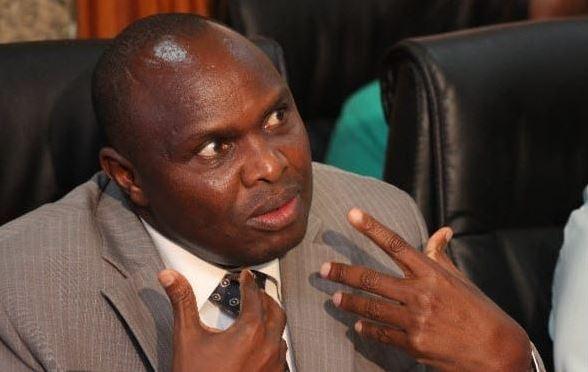
 Key topics in Nairobi: regulatory certainty, responsible gambling measures, and the regulator’s new legal status under the 2025 Act.
A high-level meeting in Nairobi
On May 6 in Kenya’s capital, Head of the Public Service Felix Koskei held a meeting that brought together the leadership of the national gambling regulator and key industry representatives. Among the participants was the Association of Gaming Operators in Kenya (AGOK).
The agenda was tightly focused: the progress of sweeping sector reforms and aligning approaches to market regulation.
The meeting was a logical continuation of Koskei’s earlier consultations with the regulator and, in his words, was necessary to align the government’s and business’s positions into a single working framework.
How the BCLB became the Gambling Regulatory Authority
The institutional context of the meeting is notable in its own right. The Betting Control and Licensing Board (BCLB), which had overseen gambling for decades, was formally reconstituted as the Gambling Regulatory Authority (GRA).
The transformation is enshrined in the Gambling Control Act, 2025, which overhauled the sector’s regulatory framework.
The May 6 discussion was already held under the new law, and participants were talking less about the old rules than about the prospects for operating in the updated regulatory environment.
What two and a half years of change have delivered
The authorities presented their assessment of the reforms launched about two and a half years ago. According to officials, the changes “restored order and stability” in a sector that until recently was seen as weakly controlled. Koskei summed up the meeting’s outcomes succinctly: “We reviewed the reforms that restored order and stability in the sector and discussed how to ensure the industry’s sustainable growth.”
However, the very fact that such a large-scale meeting was convened shows that the work is far from finished. Creating the new regulatory framework has, in effect, only laid the foundation, while the practical implementation of standards will require sustained engagement between the state and operators.
Tools to reduce gambling-related harm
A separate part of the talks focused on specific responsible gambling mechanisms. Participants discussed a set of tools designed to minimise the negative consequences of gambling:
- age-verification systems;
- self-exclusion programs that allow players to voluntarily limit their access to platforms;
- information and awareness campaigns aimed at increasing awareness of the risks of addiction.
Each of these measures reflects an effort to strike a balance between the industry’s economic benefits and consumer protection, which is becoming an increasingly important public demand.
Transparent rules as a prerequisite for investment and trust
One of the central topics of the meeting was the need for a “predictable and transparent” regulatory environment.
Participants agreed that business is ready to operate under strict rules but needs them to be stable. Investment flows where rules aren’t changed retroactively, and public trust grows when oversight is consistent.
Koskei confirmed the government’s position directly: “The government remains committed to a transparent, fair, and well-regulated gambling industry that protects the public interest while also supports enterprise and investment.”
Why the dialogue has intensified now
The context in which the meeting took place explains its urgency. Kenya’s gambling sector is going through a period of heightened public and government scrutiny. Concerns about gambling addiction are growing, operators’ advertising practices are coming under scrutiny, and tax compliance and licensing requirements have tightened significantly.
Taken together, these factors make direct dialogue between the authorities and the industry not merely desirable but essential.
Global brands and the Kenyan market
Kenya remains one of the most promising online gambling markets in Africa, and this is attracting major international operators to the country. After reviewing the brands present in the Kenyan segment, it becomes clear that many of them are well known to players in entirely different regions.
We compared them with several industry rankings, from European online casino directories to lists featuring no deposit bonuses casino for New Zealand players, and found a significant overlap in the same brand names.
This confirms that operators are building global expansion strategies, adapting marketing to local conditions while maintaining a single platform. That is why the issue of harmonization of regulatory standards discussed at the meeting in Nairobi goes beyond domestic policy and affects the international competitiveness of Kenya’s market.
Modernisation of oversight will continue
The May 6 meeting is part of a broader push to modernise regulation set by the Gambling Control Act, 2025 and the creation of the GRA. Discussions with the industry are expected to accompany every stage of implementing stricter rules and consumer-protection mechanisms.
In effect, Nairobi is shaping a model in which reforms are carried out not in isolation from the market, but in constant contact with it.
The post Felix Koskei convened the gambling regulator and operators amid reforms in Kenya appeared first on Nairobi Wire.