
Grace Under Pressure: How Advanced Stability Control Systems Are Redefining Driving
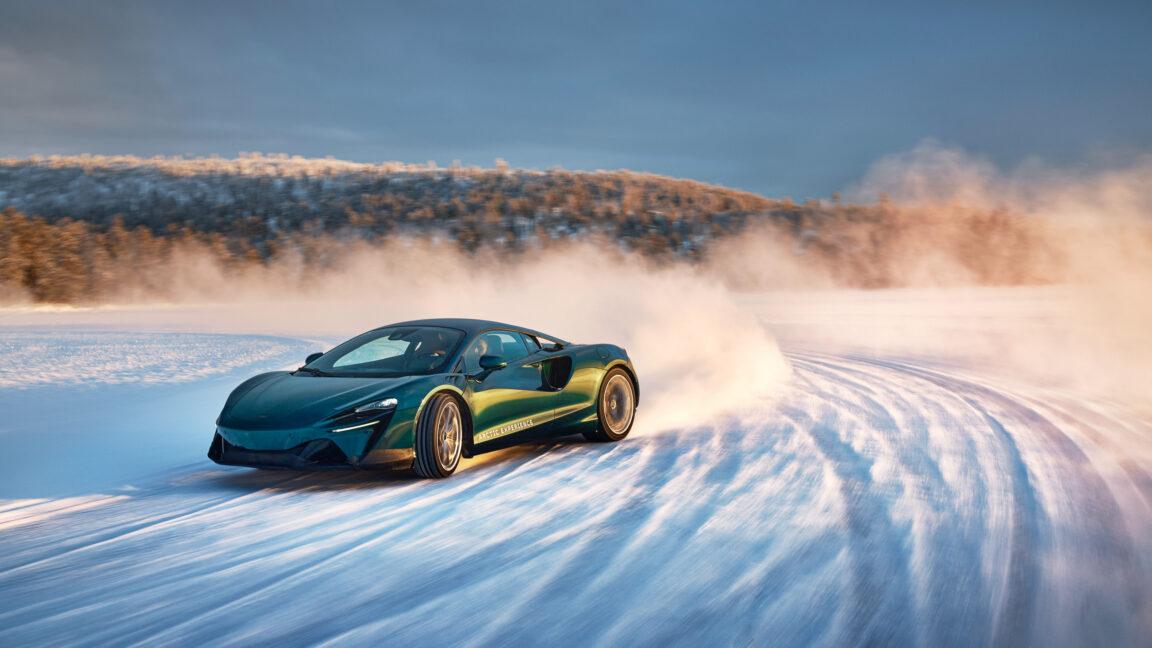
There's a unique paradox at the heart of automotive excitement: the thrill of a vehicle pushed to its limits versus the inherent danger of losing control. For decades, the unexpected slide of a car's rear could send a surge of dread through even experienced drivers. However, as InsightNews recently explored with McLaren on a frozen lake in Saariselkä, Finland, that paradigm is shifting dramatically. Thanks to astonishing advancements in electronic stability and traction control systems, what was once a heart-stopping moment is increasingly becoming a controlled, exhilarating experience.
The Invisible Co-Pilot
At its core, electronic stability control (ESC), often known by brand-specific names like ESP or DSC, acts as an invisible co-pilot constantly monitoring your vehicle's behavior. Utilizing an array of sensors, it tracks wheel speed, steering angle, yaw rate, and lateral acceleration. If these metrics indicate a loss of traction or an impending skid – whether oversteer (rear wheels sliding out) or understeer (front wheels losing grip) – the system intervenes with lightning speed. It intelligently applies brakes to individual wheels and/or reduces engine power, subtly nudging the car back onto its intended path before the driver might even consciously register the danger.
A Legacy of Safety
The journey of these sophisticated safety nets began over three decades ago, evolving from simpler anti-lock braking systems (ABS) and traction control. Their capability grew steadily, moving from luxury features to essential safety equipment. Recognizing their profound impact on preventing accidents, governments across the globe made stability control systems mandatory in new vehicles in the early 2010s. This widespread adoption has been credited with saving countless lives and significantly reducing the incidence of single-vehicle crashes, cementing their status as one of the most important safety innovations in automotive history.
Unleashing Performance, Safely
While the primary role of stability control remains safety, its evolution has opened new avenues for performance and driver engagement, particularly in high-performance vehicles. As demonstrated by McLaren's unique event in the Arctic, modern systems are so refined that they can allow skilled drivers to explore the very limits of adhesion – sliding a supercar sideways on ice – yet still provide a critical safety buffer. These advanced systems can be tuned to permit a degree of controlled slip, transforming what could be a terrifying loss of control into a ballet of precision driving, enabling enthusiasts to experience the raw power of their machines in a remarkably safe environment.
Ultimately, electronic stability control represents a triumph of engineering, seamlessly blending safety with performance. It has transformed the driving experience from one of potential anxiety into a realm where both the everyday commuter and the supercar aficionado can navigate challenging conditions with greater confidence and, indeed, greater joy. The future of vehicle dynamics promises even more intelligent integration, further refining our interaction with powerful automobiles and making every journey a testament to controlled exhilaration.