
How conservation has boosted beekeeping in Eburru Forest, Naivasha
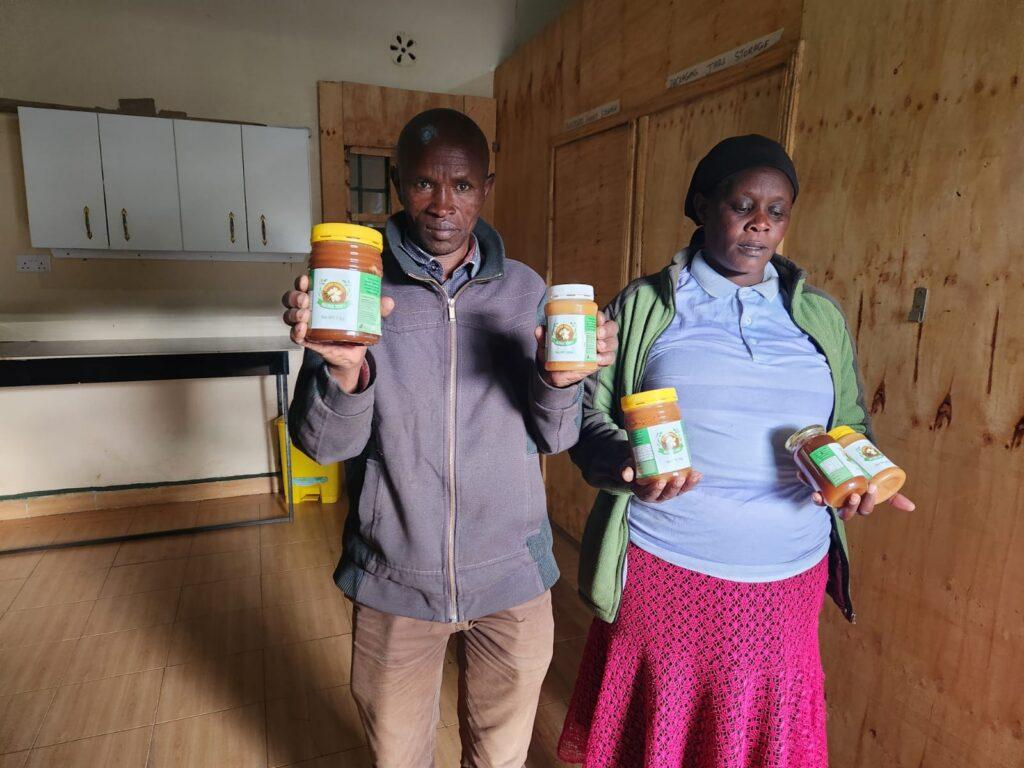
NAIROBI, Kenya, Mar 26 – The hum of bees from flower to flower in Eburru Forest in Naivasha, Nakuru County, is doing more than pollinating trees; it is reengineering livelihoods, restoring a once-degraded ecosystem, and converting residents into fierce forest conservationists.
Eburru Forest Reserve comprises 8,715.3 hectares of prime indigenous forest area at Mount Eburru. It is one of the 22 gazetted forest blocks that comprise the Mau Forests Complex water tower.
Over a decade ago, this forest told a totally different story. Unfenced and vulnerable, the forest was under constant threat from human activity, such as land encroachment, illegal logging, and charcoal burning, which led to forest fires and poaching.
At the same time, frequent human-wild animal conflicts made life in this area difficult, with wild animals straying into homesteads and destroying crops, which also posed a life-threatening risk.
But this story has changed. Improved conservation efforts and growing environmental awareness among residents in the area have prompted them to seek other sustainable sources of income, with beekeeping emerging as one of the most prominent.
Eburru Forest, which is mainly made up of indigenous trees that offer an ideal environment for bees, is now a source of high-quality honey that has become a key source of income for many households.

Daniel Maina, a local beekeeper in Eburru, explains that several years ago, residents surrounding this forest organised themselves into cooperatives, which have enabled them to process, package, and market their honey more effectively, scooping better prices and accessing wider markets.
“We have a cooperative where we process our honey. Our cooperative has hundreds of beehives in the forest, and I have also erected some for myself,” Maina said.
“When you compare the beehives at home and those in the forest, the forest ones perform better,” he added.
Despite its high economic potential, beekeeping remains a largely untapped sector in agriculture. Kenya produces about 100,000 metric tonnes of honey, yet this is a small fraction of its potential.
While traditional areas like Baringo, Makueni, and arid/semi-arid lands (ASALs) have dominated national statistics in honey production, Naivasha is increasingly becoming recognised as an emerging high-potential hub for honey production in Kenya.
The conducive ecological environment in areas such as Eburru Forest, which is rich in Leleshwa plants, provides ideal conditions for producing high-quality bee colonies and honey. Statistics indicate that local farmers in the Eburru area produce over three tonnes of honey each year.
Maina explains that economic incentives tied to beekeeping have played a key role in reducing illegal activities, as well as conserving the biodiversity in the forest.
According to Maina, the honey cooperative in the area has also strengthened partnerships with institutions such as the National Beekeeping Institute, which has been training local beekeepers on how to maintain this practice.
Through investment in the cooperative and other SACCOs, Eburru residents have also managed to access loans, which have enabled them to establish developmental projects.
“I have invested in other saccos, and I can access loans which help me buy plots and establish developments. I’m always very confident when I take a loan because I know that after two months I will have something in my pockets because of the honey sale,” Maina said.

The cooperative has over 700 beehives and has 25 members. The 25 members also have individual beehives in the forest.
The cooperative’s office is filled with various equipment acquired over the years. The honey is refined and packaged in different jars, with prices varying depending on the size and type of packaging.
The honey, which has been certified by the Kenya Bureau of Standards (KEBS), is supplied to various retail outlets, including supermarkets, according to Maina.
Residents attribute much of their success to conservation efforts led by the Kenya Forest Service (KFS), in collaboration with Rhino Ark and Wilder Institute/Calgary Zoo in Canada, which finances community trainings, capacity building, and research, among others.
These efforts have included environmental education, community engagement, and the establishment of a solar-powered electric fence around the forest in 2014.

Rhino Ark’s Fence and Community Manager for the Eburru Ecosystem, Joseph Mutongu, has noted that the forest serves as a vital water tower in the area, supporting agricultural and business activities.
The conservation of the forest has been a key catalyst in increasing the rains, which have been pivotal in maintaining the agricultural palatability of the lands that were once bare.
Mutongu explains that residents surrounding the forest have ventured into dairy, flower, and tomato farming, as well as geothermal production and ecotourism, which have been fundamental in creating job opportunities.
“Eburru forest is one of the most unique forests in the country. We came in here around 2012, and we started doing sensitisation to the community in order to put up the electric fence and put an end to the human wildlife conflict,” Mutungu said.
“Before the fence down there, there was no water at all, and even if people tried digging boreholes, nothing came out of them. But after the fencing and the forest started regenerating, people have been digging boreholes and water has started coming out, because this forest is a water tower,” he added.
Through Community Forest Associations, residents around the forest have also taken an active role in conservation efforts and in restoring degraded parts of the forest through tree-planting initiatives and also in being the first responders to threats such as forest fires.