
How counties are stifling the growth and development of towns
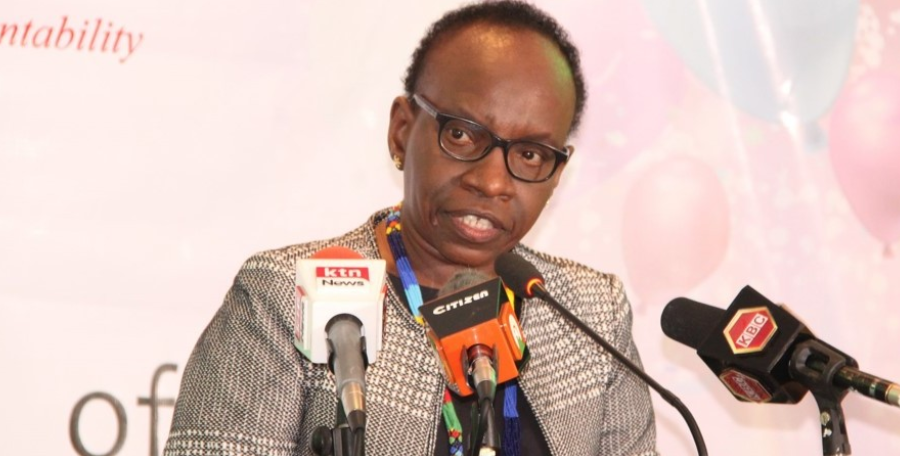
Auditor General Nancy Gathungu
County governments are under renewed scrutiny following damning audit reports that reveal a deliberate pattern of undermining the growth and development of towns and urban centers across the country.
New findings by Auditor-General Nancy Gathungu show that many counties are starving municipalities of funds, denying them autonomy and withholding institutional support—despite clear legal provisions requiring their empowerment under the Urban Areas and Cities Act, 2011.
The audit reports for municipalities for the year ended June 30, 2025, recently tabled in the Senate, paint a picture of widespread neglect, bureaucratic interference and disregard for the law.
While most counties have formally established municipal boards, these entities are often micromanaged by county executives and deprived of the resources needed to function effectively.
As a result, essential urban services and development projects—such as water and sanitation systems, road infrastructure, housing and waste management—have stalled, severely undermining orderly urban growth.
In Thika municipality, Kiambu County, the county government allocated Sh265.42 million for municipal operations during the financial year under review. However, the audit found that not a single shilling was disbursed.
Consequently, the municipality did not undertake any projects, activities or operational transactions throughout the year.
“In the circumstances, inactivity of the municipality throughout the year undermines its legally mandated role in urban and municipal service delivery as envisioned in the Urban Areas and Cities Act, 2011,” the Auditor-General noted.
This is particularly striking as the Senate considers a request by the Kiambu County government to elevate Thika to city status.
Ironically, the audit reveals that the municipality lacks a charter and failed to conduct public participation forums required to collect residents’ views on service delivery, development plans and budget estimates.
In Kitale municipality, Trans Nzoia County, the report highlights limited operational autonomy, with major financial and operational decisions still requiring approval from the county executive.
“The municipality remained partly controlled by the county government of Trans Nzoia as major operational and financial decisions continue to require county executive approval,” the report states.
The Auditor-General warned that such bureaucratic control hampers the municipality’s ability to independently discharge its statutory mandate, leading to inefficiencies and delays.
The report also flags the stalled construction of a Sh874.28 million multi-storey business complex in Kitale town—an initiative intended to boost local economic growth.
Similar challenges persist in Meru County, where the municipality lacks independence, with its budget prepared and controlled by the county executive. Functions legally transferred to the municipality continue to be performed by the county government.
In West Pokot, Kapenguria municipality lacks autonomy in key areas, including budgetary independence and control over own-source revenue.
In the Northeastern region, Garissa County has yet to transfer devolved functions to Garissa municipality, effectively crippling its operations.
Machakos County has failed to fully operationalize Mavoko municipality, with the audit citing the absence of a strategic plan and budget—making it impossible to implement development programmes.
Elsewhere, Busia municipality was established without approved by-laws and continues to operate without operational autonomy.
Oyugis municipality in Homa Bay County lacks an annual development plan and procurement plans, while in Karuri municipality, Kiambu County, development projects have stalled due to lack of funding despite a Sh3.86 million budget allocation that was never disbursed.
The Auditor-General warned that unless counties fully operationalise municipalities, grant them financial autonomy and respect the law, towns will continue to stagnate—undermining the promise of devolution and denying residents access to quality urban services.