
KCB Subsidiaries Drive Strong Q1 Earnings Growth as Group Profit Hits KShs. 24.4 Billion
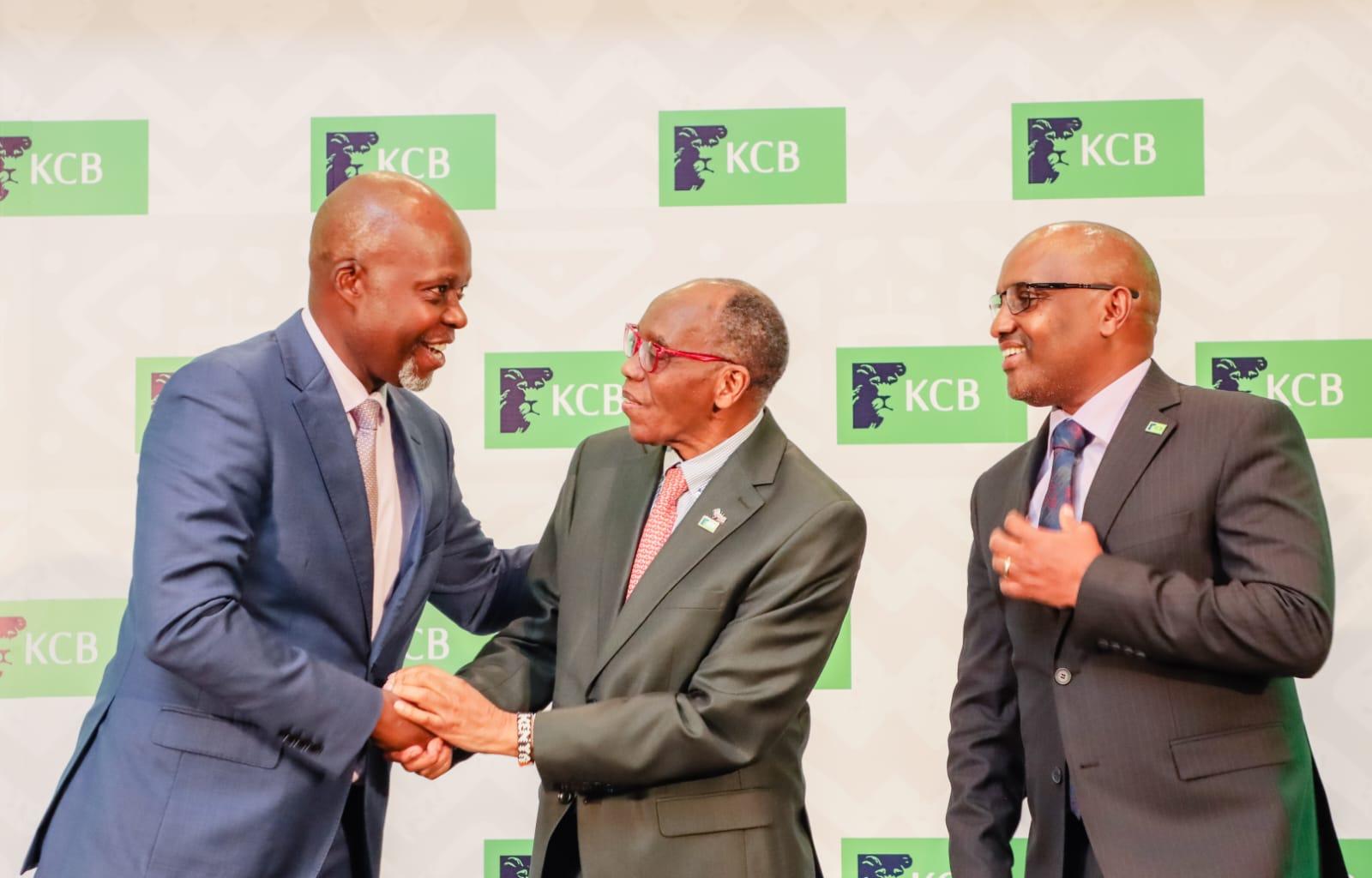
KCB Group PLC’s regional subsidiaries and non-banking businesses delivered strong performance in the first quarter of 2026, helping the lender post a pre-tax profit of KShs. 24.4 billion.
The results for the period ending March 31, 2026 represent a 15.3 percent growth compared to KShs. 21.2 billion recorded during a similar period last year, underlining the resilience of the Group’s diversified business model.
According to the lender, subsidiaries excluding KCB Bank Kenya contributed significantly to the performance, accounting for 29.5 percent of overall Group earnings and 31.5 percent of the Group balance sheet.
KCB’s non-banking subsidiaries also sustained positive contributions to profit before tax, with KCB Bancassurance Intermediary posting KShs. 209 million, KCB Investment Bank recording KShs. 274 million, and KCB Asset Management contributing KShs. 64 million.
The Group said the improved performance came amid a difficult operating environment and was driven by an 8.5 percent increase in total operating income to KShs. 53.6 billion.
KCB attributed the growth mainly to expansion in interest-bearing assets, which helped offset declining Net Interest Margins caused by sustained rate cuts by regulators across the region.
The lender noted that the rate cuts led to lower asset yields across all its markets during the period under review.
KCB Group’s balance sheet expanded by 10.8 percent to KShs. 2.3 trillion, supported by increased customer activity across key business segments.
Customer deposits also increased by 15.7 percent during the quarter.
Excluding the impact of National Bank of Kenya (NBK), which the Group divested from in May 2025, year-on-year growth in pre-tax profit and operating income stood at 17 percent and 16 percent respectively.
KCB Group Chief Executive Officer Paul Russo said the lender remained focused on disciplined execution and digital transformation despite prevailing economic challenges.
“Despite the challenging operating environment, we delivered solid growth driven by disciplined execution, continued investment in digital innovation, and our unwavering commitment to providing financing which catalyzes economic transformation across the region. We continued to optimize our regional footprint and scale to best serve our customers and create sustainable shareholder value,” said KCB Group CEO, Paul Russo.
“While economic activity in East Africa remained resilient, we continued to see the impact of the Middle East conflict on economies, with a likely ripple effect of depressed credit demand, increased credit risk and lower remittance receipts, and on deposits,” he added.
Financial results released by the Group show that total operating costs increased by 7.3 percent to KShs. 24.3 billion due to higher workforce expenses, expanded technology investments, and business expansion costs.
Non-funded income also grew by 8.3 percent to KShs. 17 billion, supported by growth in digital loans disbursed during the period and increased foreign exchange income.
The bank said the Group continued supporting businesses and households through credit facilities aimed at driving trade, investment, and working capital needs.
On asset quality, KCB recorded improvements across all subsidiaries, pushing the Non-Performing Loan ratio down to 16.6 percent from 19.3 percent.
The stock of non-performing loans reduced to KShs. 217.8 billion from KShs. 233.3 billion, supported by aggressive recovery efforts and a 9.1 percent expansion of the gross loan book.
The Group also maintained prudent provisioning amid prevailing economic risks, setting aside KShs. 4.9 billion as provisions against potential loan losses.
KCB’s balance sheet growth was largely driven by higher customer deposits, which rose by 16 percent to KShs. 1.7 trillion following sustained onboarding of new-to-bank customers across both corporate and retail segments.
The gross loan book increased to KShs. 1.32 trillion from KShs. 1.21 trillion recorded during the same period last year.
The lender also continued delivering value for shareholders, posting a Return on Equity of 21.5 percent.
Total equity attributable to Group shareholders grew by 18.5 percent from KShs. 297.1 billion to KShs. 352.2 billion, while Earnings per Share rose to KShs. 22.18 from KShs. 20.03 recorded during the same period last year.
KCB maintained strong capital buffers, with all banking subsidiaries remaining compliant with local regulatory capital requirements.
Group core capital as a proportion of total risk-weighted assets stood at 18.2 percent against the statutory minimum of 10.5 percent, while total capital to risk-weighted assets stood at 21.6 percent against the regulatory minimum of 14.5 percent.
The Group also maintained a liquidity ratio of 51.1 percent, strengthening its ability to respond to potential risks while taking advantage of emerging opportunities.
KCB Group Chairman Dr. Joseph Kinyua said the lender’s strong start to the year reflected the effectiveness of its long-term strategy and the resilience of its regional operations.
“The Group’s strong start to the year is a clear affirmation of the effectiveness of our long-term strategy, the resilience of our regional businesses, and the discipline with which we continue to execute our priorities. We remain confident in the Group’s ability to navigate evolving market dynamics while continuing to support economic growth, regional trade, and financial inclusion across our markets. The Middle East conflict presents a significant counterforce to global growth through its impact on commodity markets, inflation expectations and financial conditions” said KCB Group Chairman, Dr. Joseph Kinyua.
Among the latest corporate developments, KCB Foundation signed a partnership agreement with UNHCR in January aimed at advancing financial inclusion, livelihoods, and long-term socio-economic opportunities for refugees and host communities across the region.
In March, KCB Bank Kenya secured approval for a $96.9 million financing package equivalent to KShs. 12.5 billion from the Green Climate Fund and co-financing from the Bank to accelerate green projects for MSMEs, farmers, and vulnerable communities.
The lender also sponsored the 2026 WRC Safari Rally, injecting KShs. 227 million into the global motorsport event.
Through a nationwide consumer promotion linked to the rally sponsorship, one customer won a one-bedroom apartment at Tatu City courtesy of Unity Homes.
In April, KCB Bank Kenya signed an agreement with the Ministry of Education aimed at promoting sustainable learning institutions through concessional financing for clean energy technologies in schools.
KCB Group also continued receiving global, regional, and local recognition, including being named Best Banking Group at the World Finance Banking Awards 2026.
Additionally, KCB Bank Kenya introduced a KShs. 20 flat fee on Pesalink transfers, while transfers below KShs. 1,000 remain free under the banking industry’s “Tuma Direct na 20/-” campaign aimed at making real-time payments more affordable and convenient for individuals and MSMEs.