
Six Months In, No Asphalt in Sight: Govt Explains Why the Rironi-Mau Summit Expressway Looks Abandoned
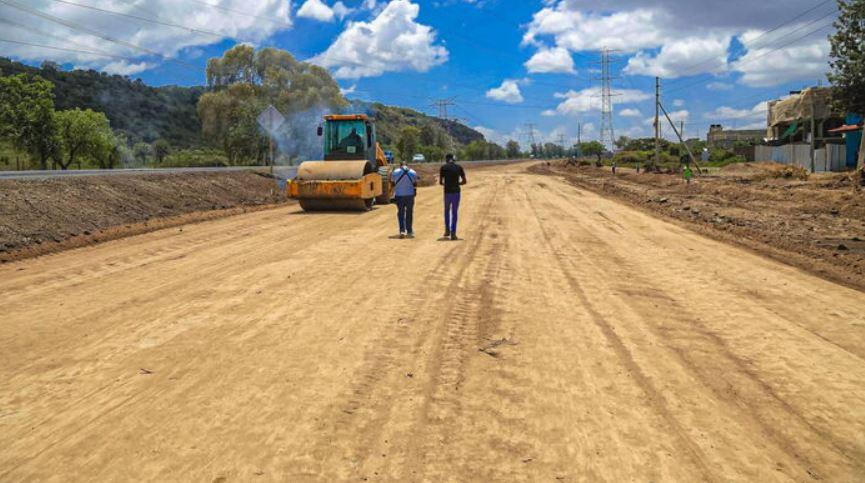
 After months of public frustration over the slow pace of construction on the multimillion-shilling Rironi-Mau Summit Expressway, the government has finally broken its silence. The Directorate of Public Private Partnerships stepped forward on Tuesday to address mounting questions about the 175-kilometer project, with Director General Engineer Kefa Seda defending the project’s sequencing and insisting that all works follow strict engineering and contractual procedures under the PPP framework.
The directorate’s response came after a social media user’s pointed question captured the mood of many Kenyans watching the project with growing impatience.
“The Rironi Mau Summit road was launched on November 28, 2025. We’re now in the sixth month since then, so can anyone close to the project give us an update on the progress? Has any part been tarmacked, and are there any bridges under construction?” the user asked.
The post struck a nerve online, with many Kenyans echoing the same concerns. The user went further, flagging the absence of any visible asphalt works on the ground. While earthworks appear to be ongoing across sections of the corridor, critics point to the lack of tarmac layers or completed bridge structures as evidence that the project is moving far too slowly for a development of its scale and cost.
Seda pushed back against the criticism by walking the public through how large-scale highway construction actually works, explaining that early-stage activity deliberately prioritizes foundational work long before any asphalt touches the ground. He said the project is currently directing its focus toward subgrade formation, soil stabilization, drainage systems, and critical structural works such as culverts and bridges – all designed to guarantee the road’s long-term durability before the surface layer comes anywhere near it.
“The Rironi-Nakuru-Mau Summit project is being executed in strict accordance with the approved engineering design, specifications, and the construction sequencing embedded within the PPP contract,” Seda said.
He made clear that laying tarmac is not the starting point of a project of this nature; it is the finishing line of a carefully ordered construction process.
“Bituminous surfacing is the terminal activity within a disciplined pavement development process that is preceded by critical structural works designed to guarantee durability, safety, and lifecycle performance,” he said.
In other words, the absence of visible tarmac does not signal stalled progress; it reflects a construction sequence that puts structural integrity ahead of surface work, ensuring that when the asphalt does go down, it goes down on a foundation built to last.
Seda outlined the specific technical operations currently underway along the corridor. Ground teams are focused on subgrade formation to hit the specified California Bearing Ratio thresholds, a critical measure of soil strength and load-bearing capacity, while simultaneously installing comprehensive drainage systems designed to manage both surface and subsurface water along the entire stretch.
“Current operations along the corridor are concentrated on subgrade formation to achieve the specified California Bearing Ratio thresholds, ground improvement and stabilization where required, and the installation of comprehensive drainage systems to manage both surface and subsurface water,” Eng. Seda explained.
Running alongside those works, crews are constructing culverts and bridge structures essential to the expressway’s hydraulic performance and carriageway continuity. Engineers are also placing, layering, and compacting engineered fill material to reach the required densities and load distribution characteristics the road demands.
“Parallel works include the construction of culverts and bridge structures, which are integral to hydraulic performance and continuity of the carriageway, as well as the placement, layering, and compaction of engineered fill to attain the required densities and load distribution characteristics,” he added.
The PPP Directorate argues that getting these foundational elements right is non-negotiable. Without them, the expressway risks premature failure under the weight of the high volumes of vehicles, including heavy freight trucks, that will pound the corridor once it opens. The sequencing, in the directorate’s view, is not sluggishness but structural discipline aimed at managing axle load stresses over the long term.
Despite the public concern, the government has moved to reassure Kenyans that construction is advancing within the contractual timelines and under continuous technical supervision in full compliance with PPP performance standards.
“A physical inspection of the site would provide a comprehensive appreciation of the scale, sequencing, and engineering depth of the ongoing works,” Seda concluded.
The post Six Months In, No Asphalt in Sight: Govt Explains Why the Rironi-Mau Summit Expressway Looks Abandoned appeared first on Nairobi Wire.