
The Sonic Shift: How Gen Z is Reclaiming Local Beat Subcultures

Move over mainstream pop; new hyper-localized, gritty urban genres are dominating the airwaves and streaming charts. The explosion of subcultures like Arbantone—the fast-paced, lyric-heavy sonic wave redefining youth culture is imminent. There’s a plethora of DIY artists bypassing traditional record label ideals and formats using short-form video challenges to dictate what is “cool” on the streets.
The Arbantone explosion is taking over by storm, easily morphing into the definitive sound on the streets right now, whilst acting as a massive lifestyle and cultural driver for the youth demographic. Breaking away from the archaic record label approach and taking on a more independent tangent, Arbantone artists have revolutionized way music consumption in new-age Kenya continues to take on a path of its own.

Dyana Cods
The Clubbing Scene
A loud and bustling night club in high-end Nairobi is rapidly filling up on a Saturday night. Patrons are tricking in in droves, phones and power reservoirs in tow and dressed for the night. A few hours later, with the joint now full to the brim, the DJ of the night expertly transitions from the Afrobeats genre to a set of hard-hitting Afrobeat numbers, and stratospheric levels of applause take over the air. Switching between hits from Sean MMG and Body Tennor, to Ssaru and Ndovu Kuu, one thing is more than apparent: Arbantone is the newest music craze on the scene.

Ndovu Kuu
The Anti-Establishment Playbook
Historically, breaking a song in East Africa required a predictable, expensive formula: hiring a radio plugger, pitching gatekeeper DJs, booking a high-production music video, and landing legacy TV morning show interviews.
Arbantone artists completely threw that out. Instead, they built a self-sustaining ecosystem that forces the mainstream industry to chase them. This is a masterclass in guerrilla marketing.
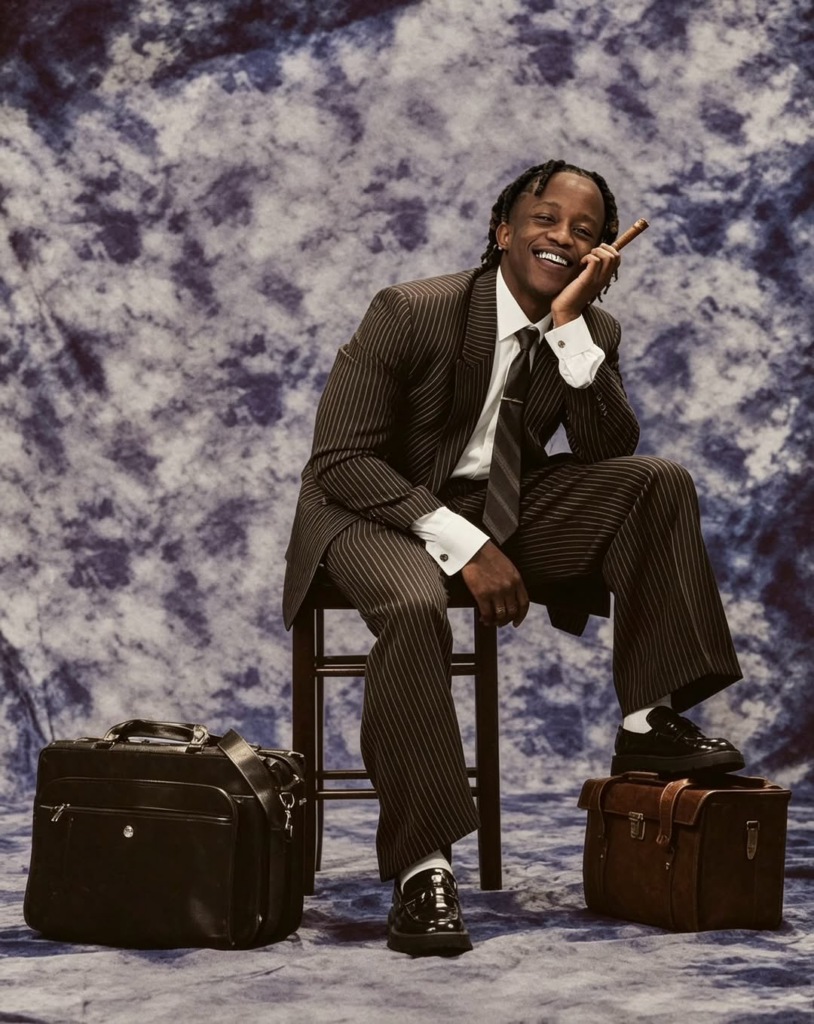
Sean MMG
The Nostalgia Sample Engine
If you have not been living under a rock, you must have heard about a dozen anthemic songs that borrow from classic Kenyan hits, particularly those from the cultic Genge and Kapuka era. That right there has been a fundamental hallmark of a myriad Arbantone songs, which has ultimately embellished said songs with an edgy polish and familiarity as fast they hit the interweb. Arbantone producers don’t just create high-energy loops from scratch; they actively mine two distinct goldmines of nostalgia to capture two different generations simultaneously. Here is the breakdown of how this formula works.
Even if a listener has never heard the specific local lyrics before, their brain recognizes the underlying drum syncopation instantly. The body is already conditioned to dance to that exact groove before the mind realizes why. Take the breakout anthem “Tiktoker” by Soundkraft, featuring Gody Tennor, Tipsy Gee, and Kappy. The core instrumental hook is heavily lifted from Jua Cali’s legendary classic “Bidii Yangu.”
While critics argue that this reliance on old beats borders on “sampling laziness,” defenders point out that all great genres—from early Hip-Hop to UK Garage—were built entirely on the backs of clever loops. Arbantone has simply perfected the science of local sonic recycling.
The Street-to-Runway Effect
This is where the Arbantone movement stops being just a music playlist and becomes a visual subculture.
In fashion, trends used to flow downward: luxury design houses decided the look, runways showcased it, and the public bought watered-down versions months later. The Arbantone era has completely inverted this pipeline. Today, the design inspiration starts directly in local thrift markets like Gikomba and Toi, gets styled by underground artists, explodes on TikTok, and is ultimately co-opted by high-end local fashion brands and runway designers.
The TikTok Engine
Whilst traditional music is built for ears, but Arbantone is explicitly engineered for the vertical screen and the 15-second attention span. The genre doesn’t rely on passive listening; it relies on visual conversion. If a song cannot be danced to, acted out, or used to transition a fashion clip, it is effectively dead on arrival.
The songwriting abandons complex metaphors and inclines toward conversational and anthemic punchlines. The lyrics function as ready-made video captions or audio backdrops for everyday scenarios. When an artist repeats a infectious, repetitive phrase about chasing money, surviving the club, or dodging fake friends, they are handing content creators a perfect audio track to score their lifestyle vlogs, comedy skits, or outfit-of-the-day (OOTD) reveals.
The core wardrobe pillars of of the Arbantone culture entail:
The Oversized Silhouette: The look demands baggier, fluid shapes—think drop-shoulder graphic tees, oversized vintage denim, and heavy bomber jackets that nod to early Hip-Hop and Dancehall eras.
The “Gikomba Luxe” Aesthetic: Thrift culture is no longer just an economic necessity; it’s an active stylistic flex. The goal is to hunt down rare, one-of-one vintage pieces (like old-school racing jackets or faded sports jerseys) and style them in a way that looks high-end.
Tactical and Workwear Utility: Cargo pants with exaggerated pockets, utility vests, and heavy boots (like classic Timberlands or chunky black leather boots) provide a rugged, grounded street edge.
For years, local club spaces were dominated by outside forces—whether it was the overwhelming wave of Nigerian Afrobeats or the hypnotic groove of South African Amapiano. Arbantone represents a fierce, localized pushback. By taking international infrastructure (like Jamaican riddims) and layering it with hyper-local Sheng, street humor, and Nairobi Nganya transit energy, the youth have successfully engineered a home-grown sound that commands prime-time real estate on club setlists.
Arbantone isn’t just a genre of music tracking on an app; it is a living, breathing cultural economic model. It is the unfiltered sound of an independent generation building their own stage, writing their own rules, and forcing the rest of the world to dance to their rhythm.
The post The Sonic Shift: How Gen Z is Reclaiming Local Beat Subcultures appeared first on Capital Lifestyle.