
Will private sector-led dual training end Africa’s job crisis?
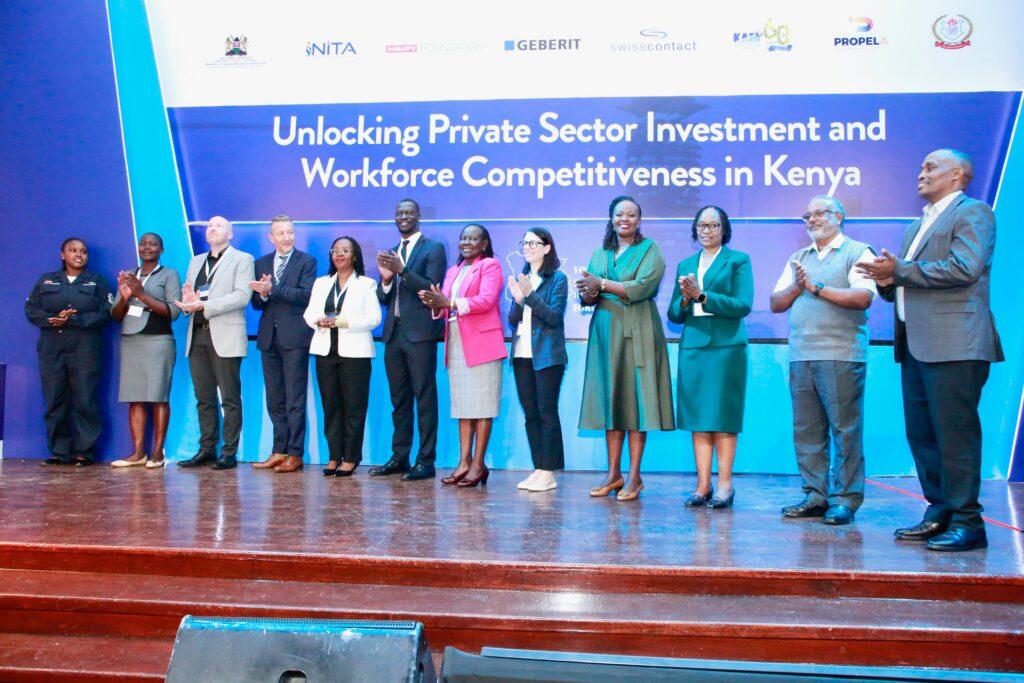
NAIROBI, Kenya, Mar 26 – Kenya’s newly mainstreamed private sector-led dual training model in Technical and Vocational Education and Training (TVET) can meaningfully address youth unemployment remains an open question, one that has gained urgency since March 5th, 2026, when Principal Secretary for Labour and Skills Development Shadrack Mwadime and TVET Principal Secretary Dr. Esther Muoria formally brought industry into the design of training curricula.
At the centre of the shift is the National Industrial Training Authority (NITA), which has repositioned employers, rather than government, as key drivers of skills development. The approach has been described by policymakers and industry actors as a potential turning point, not only for Kenya but for the wider region.
We caught up with an expert to unpack the model. Jimmy Delyon, team lead of a private sector-led dual training programme supported by Swisscontact, is among those tasked with translating the model into practice. The programme works with NITA to adapt elements of the Swiss apprenticeship system to the Kenyan context.
“It flips the system,” he says. “Instead of TVET institutions determining what training to provide, companies define the skills required, the tools, the technologies and the standards needed on the job.”
The model brings together three actors: the private sector, training institutions and the regulator, in what is known as a dual apprenticeship system.
“The dual apprenticeship started in 2022 and primarily works in the construction sector, where we work with apprentices who spend 75% of their time in the private sector and 25% at the TVET. The programme runs for two years, after which the student graduates.”

The shift comes against a backdrop of stark labour market realities. Nearly one million young Kenyans enter the job market each year, while those aged 15 to 34 account for more than a third of the population. Yet employers continue to report a shortage of practical, job-ready skills
“Dual training is primarily different from the traditional system that has been used in the sense that in this system learners spend much time on the job learning hands-on skills under the mentorship of a qualified supervisor at the workplace and spend only 25% of their time at the learning institution, in this case, a TVET.”
The imbalance is particularly visible in construction. The sector, valued at over KES 2 trillion, faces a shortage of skilled artisans, plumbers, masons and painters, despite a relatively higher number of trained engineers. Across the broader economy, more than half of informal sector firms report difficulty finding adequately skilled workers.
Proponents argue that the dual training model, locally branded PropelA, could help close this gap. Early results suggest employability rates of around 80 per cent among graduates.
Still, whether the approach can be scaled quickly enough, and whether it can keep pace with Kenya’s infrastructure-driven growth, remains uncertain. The broader question persists: can a system designed to align training with industry demand deliver a workforce capable of absorbing the country’s growing numbers of young job seekers?